
Mechanically Polished Concrete (MPC)
Premium, investment-grade indoor finish. The raw concrete slab is heavily diamond-ground, chemically hardened, grouted, and progressively polished from within. This creates an incredibly dense, dust-proof internal floor with a durable satin or mirror shine.
Premium 15-Step Architectural Diamond Polishing
No two concrete slabs are exactly the same. Therefore, we work directly with the natural character of your floor. This custom preparation creates a unique finish that perfectly fits your style and your lifestyle.
The aggregate exposure is how much of the stones inside the concrete we reveal during the initial diamond grinding process:
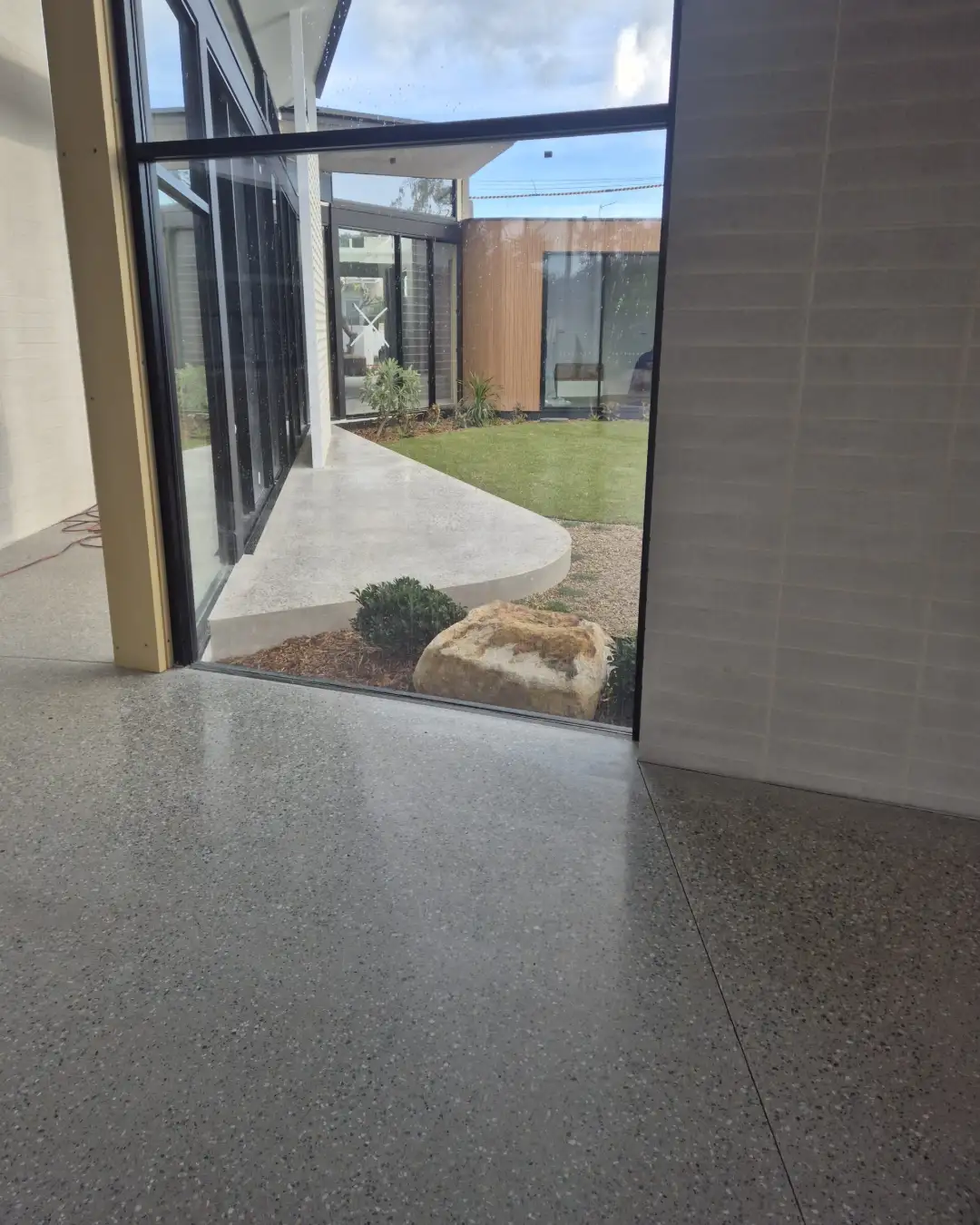
Salt & Pepper: A light grind that reveals the smooth cream of the concrete. It features just a light sprinkling of small stones and sand showing through the layout.
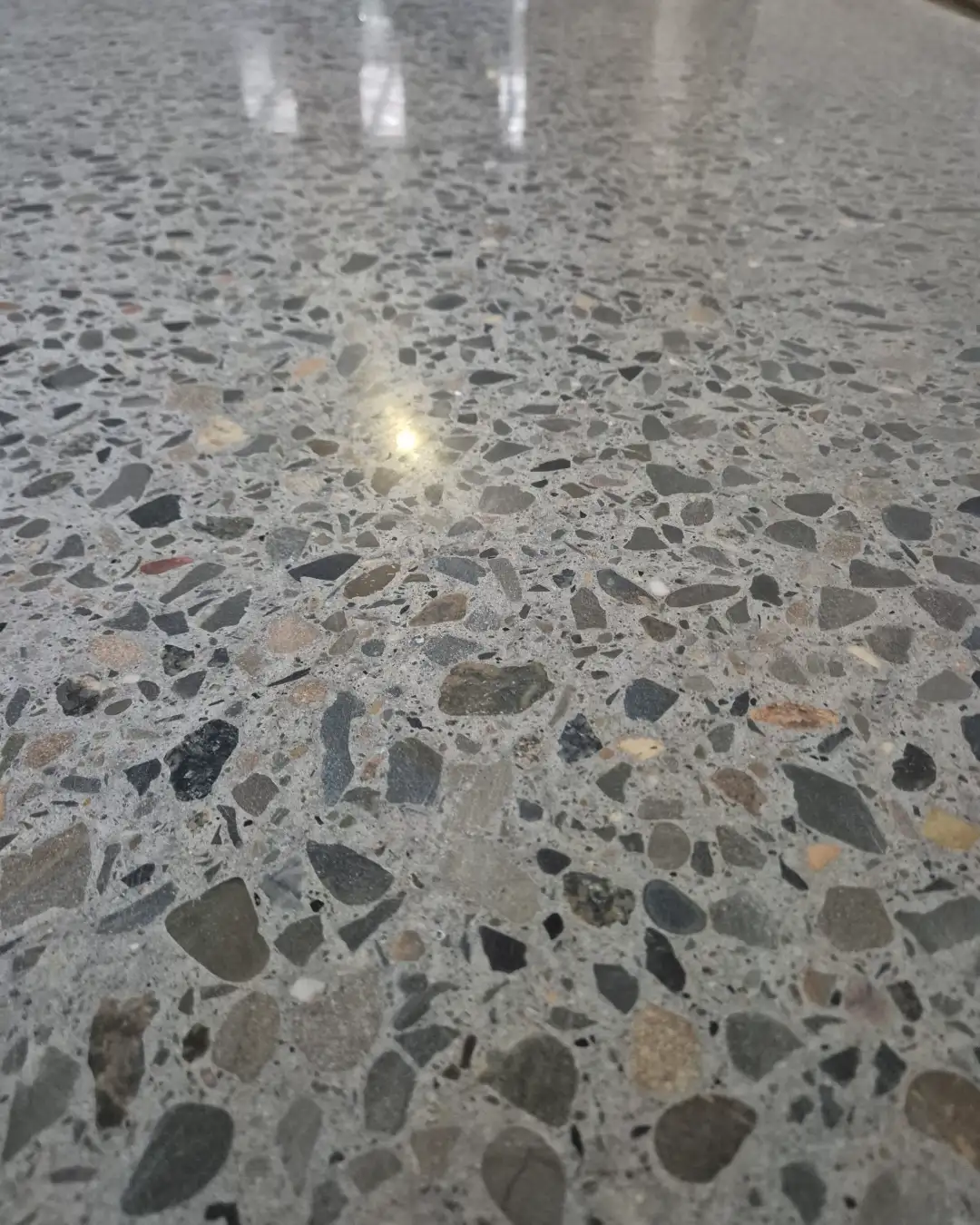
Random Exposure: A popular middle-ground look. It delivers a random, unique mix of heavy stone, light stone, and smooth concrete across the floor slate.
Heavy Exposure: A deep, aggressive mechanical grind. This process reveals the maximum amount of stone aggregate for a dramatic, high-end look.
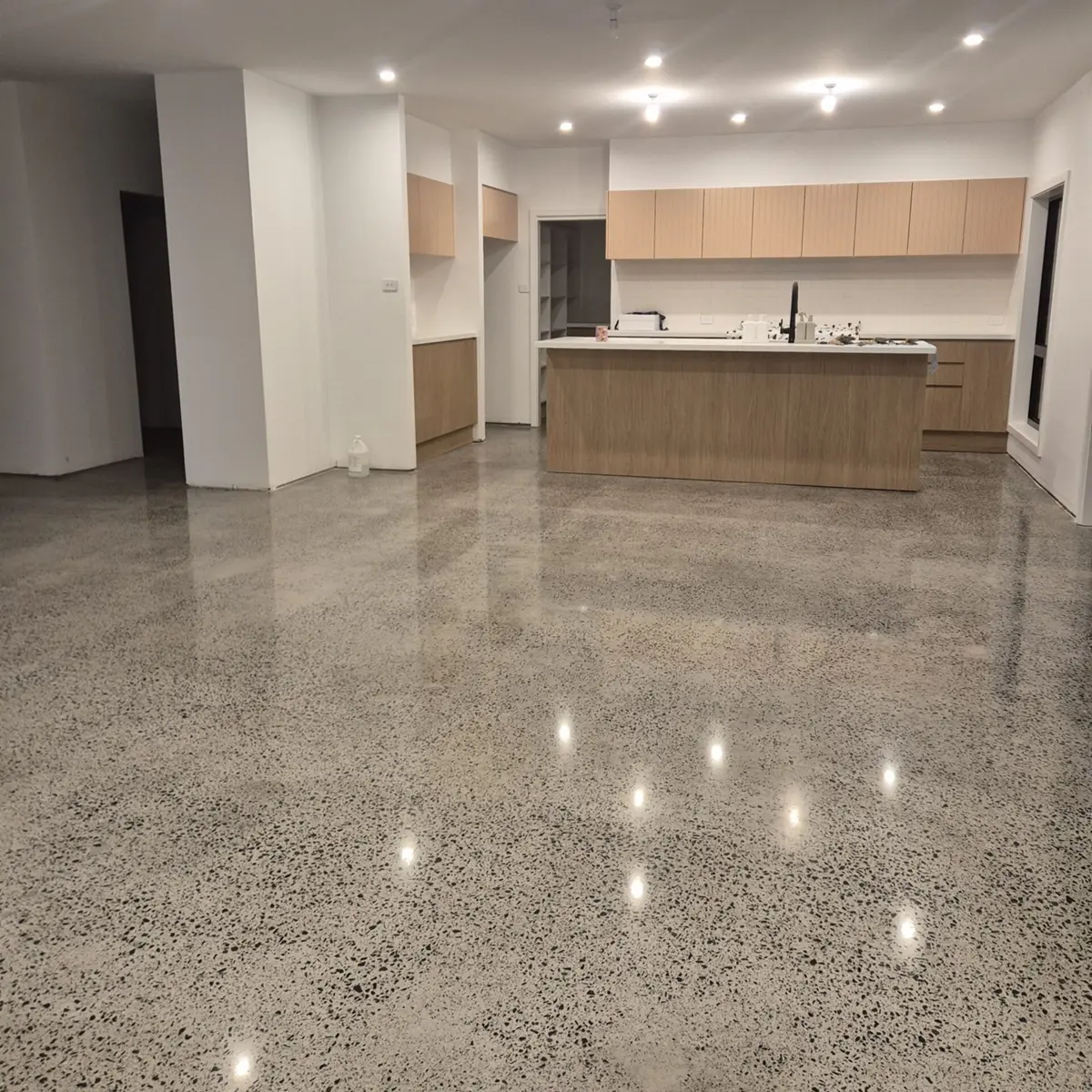
Reflective Polish (800 Grit): The structural entry point for true mechanical polishing. It delivers a highly reflective, glossy shine. This option begins to bounce light and room shapes across the floor layout while remaining durable and easy to maintain day-to-day.
Showroom High Gloss (1500 to 3000 Grit): The premium, top-tier finish for maximum architectural impact. However, this option requires a dense, well-cured slab to achieve a dramatic, glass-like showroom look. It creates striking, deep mirror reflections that bounce light all the way through the home.
Frequently Asked Questions
Can Mechanically Polished Concrete (MPC) be done outdoors?
No, because it is an extreme slip hazard and the outdoor elements will break it down in no time, so we highly recommend Honed Concrete or a Grind & Seal instead. True Mechanically Polished Concrete (MPC) is strictly an indoor flooring option. Because the concrete is polished down to a mirror-smooth finish, it becomes incredibly slippery and dangerous when it gets wet. On top of the safety risk, an outdoor environment is too harsh—exposure to rain, UV rays, and weather elements will break down the polished finish in no time, completely destroying the high-gloss shine.
For all exposed outdoor spaces like driveways, pathways, or open patios, we recommend Honed Concrete or a slip-resistant Grind & Seal. These alternatives give you that premium, high-end stone look with a durable, built-in grip designed to withstand the Australian weather.
Can I get a matte finish?
While it is possible to achieve a low-grit matt look (like a 100 or 200 grit mechanical finish), we advise going to a minimum of an 800-grit semi-gloss refinement for domestic living and cooking spaces. A low-grit matte mechanical finish leaves the native stone pores completely wide open. Even when treated with high-quality sub-surface impregnating sealers, everyday household acids like red wine, lemon juice, coffee, and vinegar will slip straight past the sealer and permanently etch or stain the concrete matrix almost instantly. For a high-performance domestic kitchen, the concrete matrix must be mechanically closed and hardened tightly using higher diamond grit resin pads to resist liquid penetration.
Is Mechanically Polished Concrete Stain-Proof?
No penetrating sealer makes concrete 100% acid-proof. Because MPC needs to breathe, things like red wine, lemon juice, or vinegar will etch the surface if left to sit. If you want a floor where you can leave a red wine spill overnight, we recommend our Topical Polyurethane (Grind & Seal) or Resin Coating packages, which create a 100% non-porous barrier.
What is the main difference between Mechanically Polished Concrete (MPC) and a Grind and Seal?
Mechanically Polished Concrete (MPC) is a premium, multi-step process. First, the concrete slab is chemically hardened with specialized densifiers. Then, it is progressively polished using finer grit resin diamond pads until it achieves a natural, mirror-like gloss finish. In contrast, a Grind and Seal is a faster process where the surface is back to expose the aggregate stone and apply a clear, wear-resistant topical polyurethane or epoxy coating to create the shine.
What are the concrete slab requirements for a premium mechanically polished finish?
Achieving a mirror-like floor depends entirely on the initial concrete placement. Prior to pouring your new concrete slab, please review our comprehensive slab quality guidelines. This ensures proper chemical curing, ideal MPA stone ratings, and flawless aggregate exposure targets.
Will the concrete polishing process create a large amount of dust inside my property?
No. Safety and cleanliness are our primary focus during internal installations. ProSand uses state-of-the-art planetary grinders connected directly to industrial-grade, H-class dust extractors. This advanced setup creates a virtually dustless environment. Consequently, your surrounding walls, ceilings, and fixtures remain completely clean throughout the installation.
Is polished concrete slippery for outdoor areas like walkways or pool surrounds?
For open, outdoor areas exposed to rain and coastal weather, we strongly recommend our specialized Honed Outdoor Concrete finish instead. This technique leaves the exterior concrete surface beautifully smooth and uniform while retaining a high-traction, slip-resistant texture. Therefore, it remains perfectly safe for wet outdoor environments.
How do I maintain my new internal mechanically polished concrete floors?
Mechanically Polished Concrete is exceptionally hard-wearing and dust-proof, requiring only regular vacuuming and a damp mop with a pH-neutral cleaner to protect the stone’s sheen. However, because a genuine MPC floor remains breathable and utilizes sub-surface impregnating treatments rather than plastic film-formers, it is not 100% stain-proof. All acidic household spills (especially wine, citrus, soft drinks, and vinegar) must be wiped up immediately to prevent permanent chemical etching of the concrete matrix.