Mechanically polished Concrete Process
Our Mechanically Polished Concrete Process
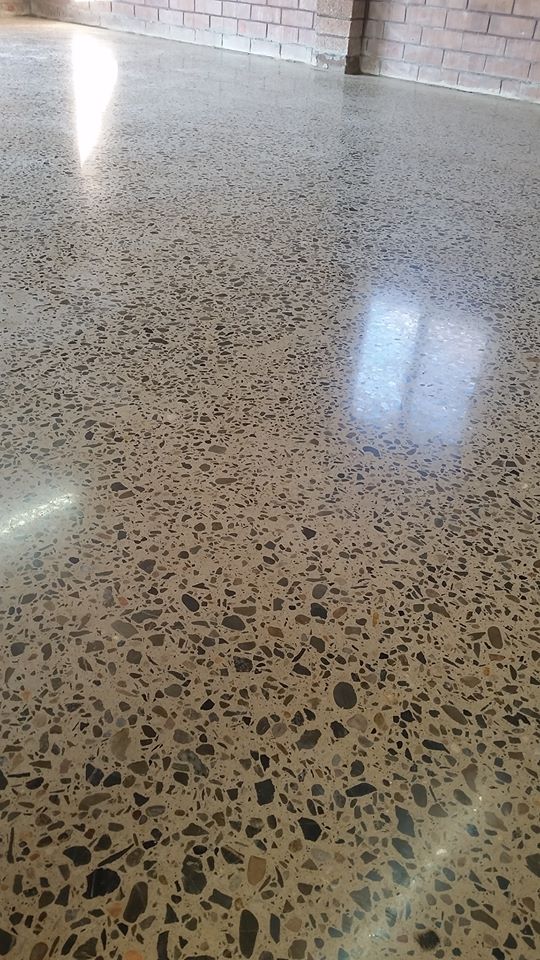
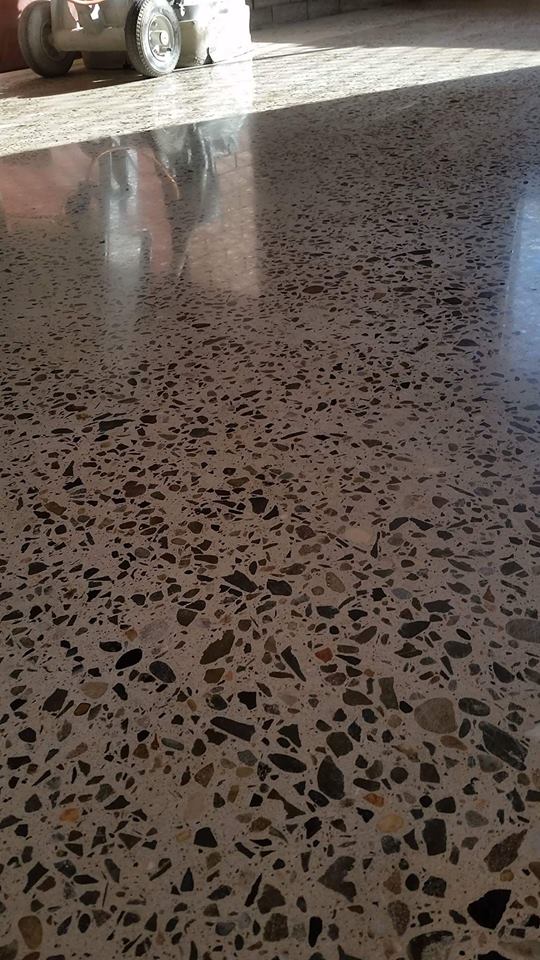
Mechanically Polished Concrete (MPC) is the absolute gold standard in modern architectural flooring. True mechanical polishing is a highly meticulous, multi-step process involving up to 15 distinct structural stages. It should never be confused with a budget grind and seal. Done properly, the concrete floor is progressively diamond-ground to your chosen stone exposure, honed, densified, grouted, and polished using progressively finer resin diamond pads up to an 800 to 3000 grit finish, depending on your target gloss level. This premium finish is built specifically to suit high-quality, properly specified 32MPa concrete mixes across domestic, commercial, and industrial projects.
Mechanically Polished Concrete (MPC) is the absolute gold standard in modern architectural flooring. True mechanical polishing is a highly meticulous, multi-step process involving up to 15 distinct structural stages. It should never be confused with a budget grind and seal. Done properly, the concrete floor is progressively diamond-ground to your chosen stone exposure, honed, densified, grouted, and polished using progressively finer resin diamond pads up to an 800 to 3000 grit finish, depending on your target gloss level. This premium finish is built specifically to suit high-quality, properly specified 32MPa concrete mixes across domestic, commercial, and industrial projects.
Planning Your Premium Concrete Floor
Securing a flawless, mirror-like floor must be planned from the very beginning of your project. The final appearance depends entirely on the initial quality of the concrete pour and the structural timing of the project. While each concrete slab possesses unique characteristics that may require a custom mechanical approach, we follow strict operational stages to ensure success.
Securing a flawless, mirror-like floor must be planned from the very beginning of your project. The final appearance depends entirely on the initial quality of the concrete pour and the structural timing of the project. While each concrete slab possesses unique characteristics that may require a custom mechanical approach, we follow strict operational stages to ensure success.
Prior to pouring, you must decide on your preferred flooring style, aggregate stone exposure (ranging from pure concrete cream to full stone exposure), and final gloss levels. For new installations, the first stage involves our mobile team pre-grinding the raw slab 7 to 28 days after it is poured—strictly before any wall framing or secondary construction commences. The second stage of honing, polishing, and sealing takes place at the plaster stage, before skirting boards, cabinetry, or joinery are installed.
For existing renovations or older slabs, our diamond grinding process must start before final painting begins, with skirting boards and fixtures removed wherever possible. If you are polishing a floor in a completely finished home, heavy wall protection measures must be put into place to manage the workspace safely.
What We Require On Site
To achieve an architectural finish, we require clear, unhindered parking and clean access to the slab at all times. Power and water utilities must be fully active on-site throughout the grinding process. To ensure our planetary grinders can profile your floor evenly, all doors, skirting boards, and trims should be removed prior to our arrival. Our walk-behind machinery operates within 10mm to 15mm of walls, meaning any permanent fixtures left behind will require extensive hand-grinding that may not perfectly match the wide floor layout. Final wall painting should always be left until the flooring installation is completely finished to prevent marking.
To achieve an architectural finish, we require clear, unhindered parking and clean access to the slab at all times. Power and water utilities must be fully active on-site throughout the grinding process. To ensure our planetary grinders can profile your floor evenly, all doors, skirting boards, and trims should be removed prior to our arrival. Our walk-behind machinery operates within 10mm to 15mm of walls, meaning any permanent fixtures left behind will require extensive hand-grinding that may not perfectly match the wide floor layout. Final wall painting should always be left until the flooring installation is completely finished to prevent marking.
Dust Management and Reality Checking
The mechanical diamond grinding and polishing process is a heavy-duty, time-consuming trade operation. On a standard domestic full-stone exposure project, our machinery will physically shave down several hundred kilograms of concrete dust and slurry. ProSand operates a completely dust-controlled setup, using high-performance, industrial-grade H-Class dust extractors to actively contain airborne particles. While we go to extreme lengths to protect your environment, clients should expect faint traces of boot prints or minor slurry lines in construction zones or driveways, which wash off easily with standard water and a mop once our multi-stage hand-over is complete.
The mechanical diamond grinding and polishing process is a heavy-duty, time-consuming trade operation. On a standard domestic full-stone exposure project, our machinery will physically shave down several hundred kilograms of concrete dust and slurry. ProSand operates a completely dust-controlled setup, using high-performance, industrial-grade H-Class dust extractors to actively contain airborne particles. While we go to extreme lengths to protect your environment, clients should expect faint traces of boot prints or minor slurry lines in construction zones or driveways, which wash off easily with standard water and a mop once our multi-stage hand-over is complete.